Yes, massaging sore muscles can help when the soreness is mild, dull, and linked to normal activity or exercise. It usually helps by making the muscle feel less tight and easier to move, not by magically speeding up healing. The first thing to check is whether the pain feels like ordinary soreness or something sharper, swollen, bruised, or unusual.
How massage helps sore muscles
Massage is most useful as a comfort tool. It can calm the sore feeling, reduce stiffness, and help you move normally again while your body does its own recovery work.
It can reduce the feeling of soreness
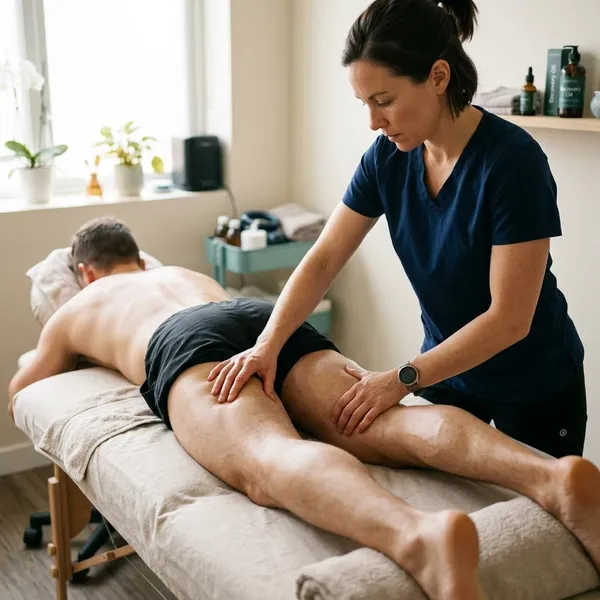
A gentle massage can make soreness feel less intense for a while. Touch and light pressure can change how strongly you notice discomfort, which is why rubbing a sore calf or shoulder often feels naturally relieving.
It can relax tight and stiff muscles
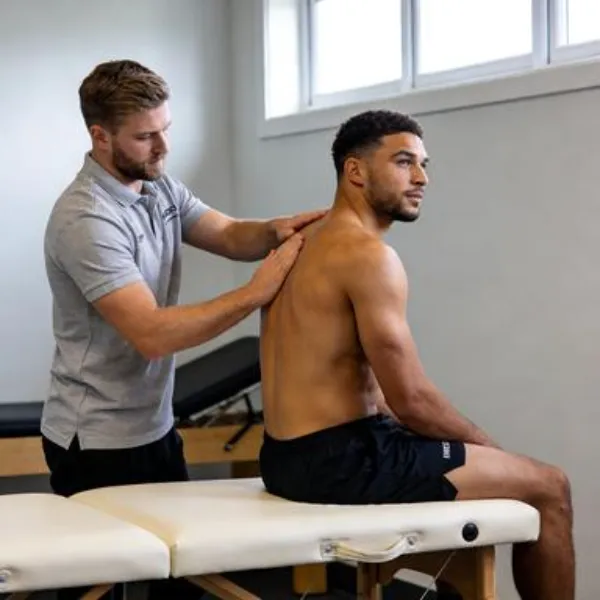
Sore muscles often feel tight as well as tender. Slow rubbing, kneading, or broad pressure can help the area relax, especially in common tight spots like the shoulders, calves, thighs, and lower back.
It may help you move more comfortably
Massage can make ordinary movement feel less awkward. If your thighs are sore after lunges, your first few steps downstairs may feel easier after a short, gentle massage. If your shoulders are tight after carrying groceries or a child, light massage may make reaching overhead feel less restricted.
When massage works best
Massage works best when the soreness is predictable: you did more activity than usual, the muscle feels broadly achy, and the discomfort improves gradually as you move. It is less useful when pain feels sudden, sharp, or connected to a clear injury.
It often helps with mild post workout soreness
Mild post-workout soreness is one of the better times to use massage. This is the dull, spread-out ache that often appears after a harder gym session, a longer run, a sports game, or a weekend project your body was not used to.
- Usually okay: broad soreness in both thighs after squats.
- Be more careful: one sharp spot that hurt suddenly during a lift.
- Good sign: the muscle loosens as you warm up.
- Warning sign: pain gets worse with each step or rep.
Gentle pressure is usually better at first
The biggest mistake is assuming that sore muscles need hard pressure. They usually do not. Start with pressure that feels soothing enough that you can breathe normally and keep the muscle relaxed.
Timing matters when muscles feel very tender
If a muscle is so tender that even light touch feels unpleasant, wait or use a softer approach. A warm shower, easy walking, or very light rubbing around the area may be better than direct pressure.
For normal soreness, many people do well with a short massage later the same day or the next day, when stiffness starts to show up. The useful test is not the clock; it is whether the muscle feels calmer afterward instead of more irritated.
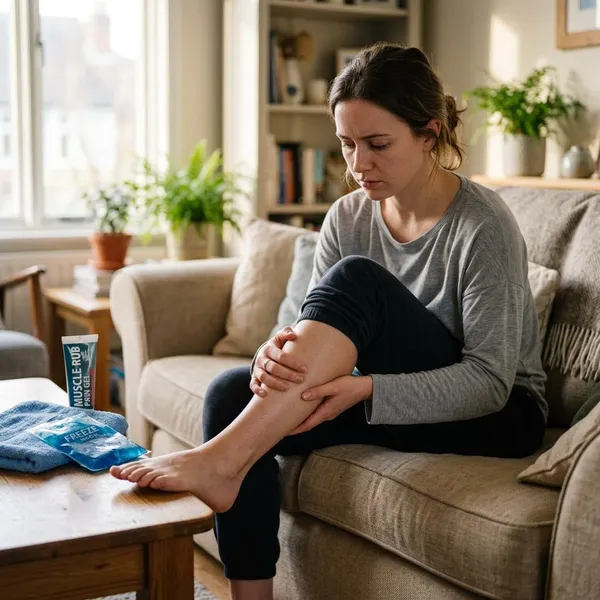
When massage may not be a good idea
Massage is not the right answer for every kind of muscle pain. Before pressing on a sore area, check the type of pain, how it started, and whether there are signs of injury.
Sharp pain is not the same as normal soreness
Normal soreness is usually dull, achy, stiff, and spread across a muscle. Sharp pain feels more sudden, pinpointed, stabbing, or electric. If you felt a pull during exercise and one exact spot now hurts with a specific movement, treat it more cautiously than routine soreness.
Swelling or bruising needs extra caution
Swelling and bruising are reasons to back off, especially if they appeared after a fall, impact, twist, or sudden strain. Deep massage over a swollen or bruised area can irritate tissue that may already be injured.
- Do not press deeply into visible bruising.
- Avoid massage if swelling is increasing.
- Be cautious if the area feels hot or looks unusually red.
- Get advice if you cannot use the limb normally.
Severe pain may need rest instead of pressure
Severe pain is different from normal soreness. If you can barely walk, cannot lift your arm, or feel strong pain during simple movement, rest and reduced activity are usually smarter than trying to massage through it.
Seek medical help sooner if severe muscle pain comes with major swelling, numbness, weakness, fever, chest pain, trouble breathing, or dark urine after intense exercise. Those are not normal sore-muscle situations.
Which types of massage are most useful
The best type depends on how the muscle feels. For fresh soreness, simple and gentle is usually enough. For longer-term tightness, firmer work may help, but only if the area is not acutely painful.
Light massage works well for general soreness
Light massage is the safest starting point for most people. Use broad strokes, easy kneading, or slow rubbing over the sore area rather than digging into one painful point.
Deep tissue is better for some tight muscles
Deep tissue massage can be useful for stubborn tightness, such as upper-back tension from desk work or glute tightness from sitting a lot. It is less ideal for fresh soreness that feels tender to the touch.
Massage guns can help if used carefully
Massage guns can help larger muscles feel looser, especially quads, calves, glutes, and the upper back. They are convenient, but they are not automatically better than hands or a simple self-massage.
- Start on a low setting.
- Keep the head moving.
- Use short passes at first.
- Avoid bones, joints, bruises, swelling, and sharp pain.
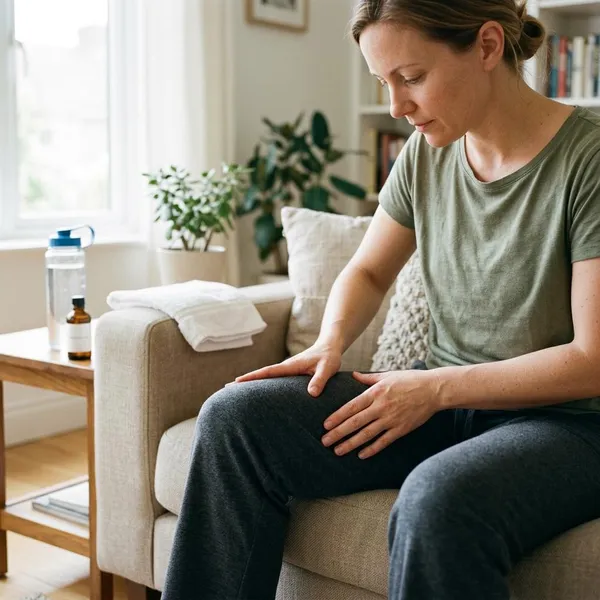
How to massage sore muscles safely
Safe massage is mostly about restraint. You do not need advanced technique; you need to avoid turning a sore muscle into an angrier one.
Start with light pressure and short sessions
Begin with a short session and light pressure. Five minutes on one sore area is often enough to see whether the muscle responds well. If it feels better afterward, you can repeat later rather than doing one long, aggressive session.
- Warm the area with easy movement or a warm shower.
- Use slow, broad strokes first.
- Add mild kneading only if it feels good.
- Check how the muscle feels later that day.
Avoid pushing hard on very painful spots
The most painful spot is not always the place to attack. Work around it first. For example, if one part of your outer thigh feels unusually tender after a workout, massage the surrounding thigh and hip area gently before deciding whether that exact spot needs any pressure at all.
This is especially important with tools. A thumb, ball, foam roller, or massage gun can all be too much if you stay on one sensitive point and try to “break it up.”
Stop if the pain gets worse instead of better
A helpful massage should leave the muscle feeling calmer, looser, or easier to use. Stop if pain ramps up, the area starts throbbing, or your movement feels worse afterward.
- Good response: less stiffness, easier walking, relaxed feeling.
- Poor response: more soreness, swelling, bruised feeling, sharper pain.
- Next step: switch to rest, easy movement, or professional advice if symptoms keep worsening.
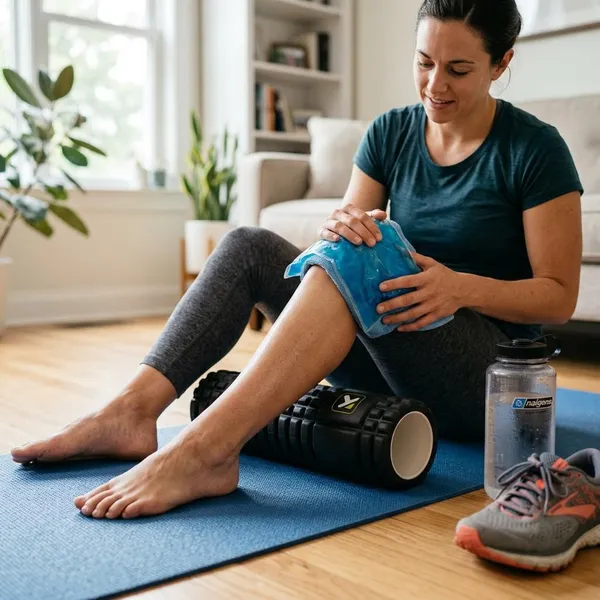
What else helps sore muscles recover
Massage is only one part of recovery. If you massage a sore muscle but keep overloading it, sleep poorly, or avoid all movement, the soreness may stick around longer than necessary.
Gentle movement can reduce stiffness
Complete rest can make normal soreness feel stiffer. Gentle movement often helps because it keeps the area warm and encourages more natural motion.
- Sore legs may feel better after an easy walk.
- Tight shoulders may respond to light arm circles.
- A stiff back may prefer slow walking over sitting all day.
Rest and sleep support recovery
Massage may reduce discomfort, but rest is where recovery gets a real chance. If soreness keeps building because you train hard every day or sleep too little, stronger massage will not solve the bigger problem.
Heat hydration and pacing also make a difference
Heat can help when muscles feel stiff, especially before light massage or gentle movement. Hydration supports normal body function, but it will not instantly erase soreness. Pacing is often the most overlooked piece: increase activity gradually instead of repeating the same “too much, too soon” cycle.
Conclusion
Massage is worth trying for ordinary sore muscles when the pain is dull, mild to moderate, and clearly linked to activity. Keep it gentle, avoid sharp or swollen areas, and judge it by the result: if the muscle feels calmer and moves better afterward, it is helping; if it feels worse, your body is telling you to back off.