If your neck feels tight from screens, driving, stress, or sleeping awkwardly, gentle neck stretches can help when the discomfort is mild and muscular. The safest approach is small, slow movement: stop if you feel sharp pain, dizziness, tingling, or symptoms spreading into your arm. Start with just a few minutes and focus on comfort rather than how far you can stretch.
Gentle neck stretches to try
The best neck stretches are usually simple ones you can repeat without forcing your head into a deep position. Think of these as reset movements for mild stiffness, not a test of flexibility. If your neck feels irritated, begin with the smallest range that feels safe and build from there.
Chin tucks help reduce forward head tension
Chin tucks are useful if your head tends to drift forward while you work on a laptop or look down at your phone. Sit or stand tall, look straight ahead, and gently draw your chin backward as if making a small double chin. Hold for 3 to 5 seconds, then release. Try 5 to 10 slow repetitions.
- Keep your eyes level: Do not tip your head up or down.
- Use a small movement: This should feel controlled, not dramatic.
- Stop if it pinches: A mild effort is fine; sharp discomfort is not.
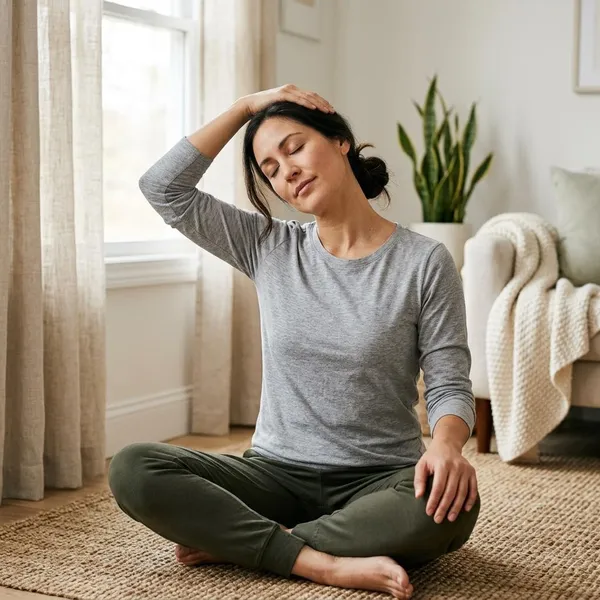
Side bends stretch the neck and upper shoulder
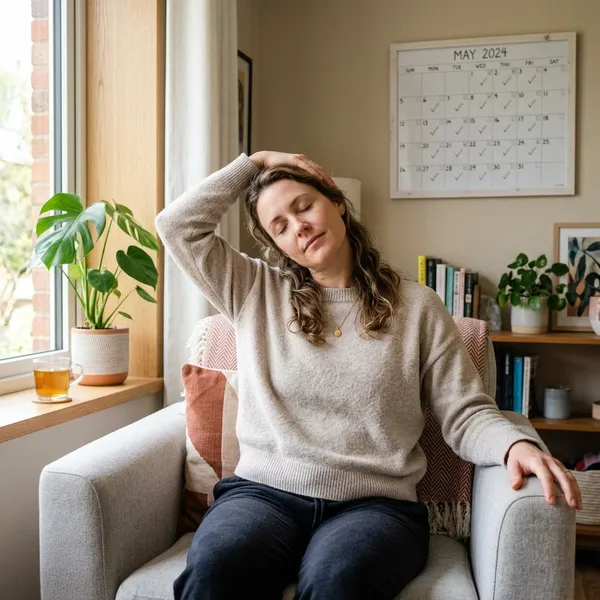
For tightness along one side of the neck, slowly bring your right ear toward your right shoulder while keeping the shoulder down. Hold a light stretch for 10 to 20 seconds, return to center, then repeat on the other side. This can be especially helpful after carrying a shoulder bag, sitting with one shoulder raised, or holding tension during a stressful day.
Slow head turns improve neck mobility
Turn your head slowly to the right, keeping your chin level, and stop before the movement feels strained. Hold for a few seconds, come back to center, and repeat to the left. Five slow turns per side is enough for many people.
Forward nods ease stiffness at the back of the neck
Lower your chin toward your chest until you feel a mild stretch at the back of your neck. Keep your shoulders relaxed and avoid rounding your whole upper back forward. Hold for 10 to 15 seconds, then return to neutral. This is often a good choice when stiffness sits near the base of the skull after long screen time.
Shoulder rolls release tension around the neck
Neck tension is often tied to tight shoulders, so shoulder rolls are worth including. Roll both shoulders up, back, and down 8 to 10 times, then reverse direction. Keep the circles slow and easy rather than quick or exaggerated.

How to do neck stretches safely
Neck stretching should feel calm, controlled, and easy to stop. The first thing to check is not how far your head moves, but whether the movement feels safe from the start. Mild pulling can be normal; pain, dizziness, numbness, or spreading symptoms are warning signs.
Move slowly and stay within a comfortable range
Move into each stretch gradually, as if you are testing the range rather than chasing it. A comfortable range means you can breathe normally, keep your face relaxed, and return to neutral without discomfort. If your neck feels guarded, make the movement smaller instead of pushing through.
Hold each stretch without forcing the movement
Short holds are usually enough. For many people, 10 to 20 seconds works well, but a sensitive neck may prefer shorter holds with more rest between repetitions. Avoid pulling hard on your head with your hand; pressure can turn a gentle stretch into an irritating one.
- Good sign: Light tension that eases as you breathe.
- Too much: Sharp pain, tingling, numbness, or symptoms moving into the arm.
- Better option: Reduce the range or skip that stretch for the day.
Keep your shoulders relaxed while stretching
Before each movement, let your shoulders drop away from your ears. This matters most during side bends and chin tucks, where many people accidentally lift or tense the shoulders. Sitting with both feet on the floor can also make the stretch feel steadier.
How often to do gentle neck stretches
You do not need a long routine for neck stretching to be useful. Short, regular sessions tend to work better than a big stretching effort only when your neck already feels bad. The goal is to interrupt stiffness before it builds up.
Short daily sessions usually work best
A simple daily routine of 3 to 5 minutes is enough for many people with mild desk-related tightness. Morning stretching may help if you wake up stiff, while an afternoon or evening reset may suit you better if tension builds during work.
A few minutes at a time can be enough
When time is limited, use a small sequence instead of skipping movement completely:
- 5 chin tucks
- 5 slow head turns each side
- 2 side bends each side
- 10 shoulder rolls
Regular practice matters more than long sessions
A few minutes most days is usually more helpful than one long session once a week. Long sessions can tempt you to stretch harder than your neck wants, especially when you are trying to get quick relief. Attach the habit to something you already do, such as making coffee, closing your laptop, or getting ready for bed.

When neck stretches can help most
Gentle stretching is most useful when the problem feels mild, familiar, and connected to posture or muscle tension. It is less appropriate for sudden pain after an accident, symptoms that travel into the arm, or pain that keeps getting worse.
They often help with stiffness from sitting
If you sit for long periods, your neck may get stiff simply because it has stayed in one position too long. A person working at a laptop all afternoon may benefit from chin tucks and head turns, while someone who drives often may notice slow rotations help with that “stuck” feeling when looking over the shoulder.
Stretching works best here when it is paired with changing position. Stand up, walk for a minute, raise your screen if it is too low, or move your phone closer to eye level instead of only stretching after the stiffness appears.
They can ease mild tension after a long day
After a stressful day, the neck and shoulders can stay braced even when you are no longer busy. Forward nods, side bends, and shoulder rolls are good low-effort choices in the evening, especially if you keep the movements slow and pair them with relaxed breathing.
When to stop and be careful
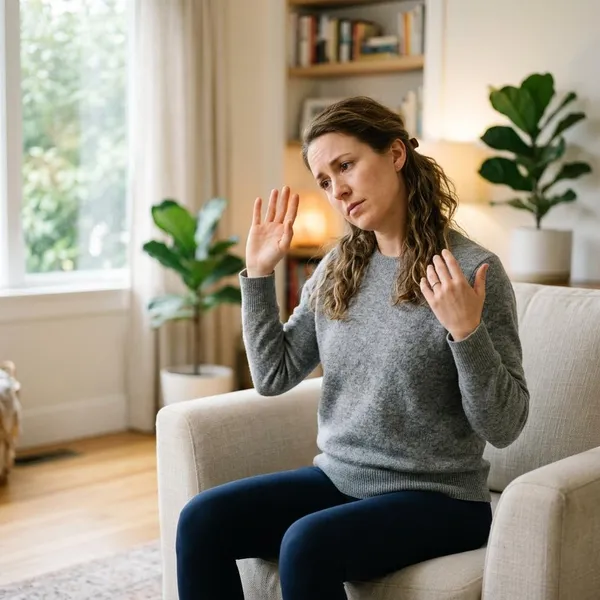
The neck is not a place to push through warning signs. If a stretch feels wrong, stop first and judge later. A useful stretch should leave you feeling the same or a little easier, not more painful, dizzy, or unsettled.
Sharp pain is a sign to stop right away
Stop immediately if you feel stabbing, pinching, or sudden strong pain. Return your head to a neutral position and do not repeat the stretch to “test” it. Be especially cautious if the pain began after a fall, car accident, sports impact, or sudden twist.
Dizziness means the stretch is not right for you
Dizziness, lightheadedness, blurred vision, nausea, or feeling off balance are not normal stretch sensations. Sit down if needed and avoid that movement. If it happens more than once, or if it comes with headache, weakness, numbness, or symptoms in the face or arm, get professional advice.
Ongoing pain may need professional advice
If neck pain lasts more than a few days, keeps returning, wakes you at night, or travels into the shoulder, arm, or hand, stretching alone may not be enough. A healthcare professional or physical therapist can check whether you need a more specific plan, such as strengthening, workstation changes, sleep adjustments, or treatment for nerve-related symptoms.
How to make neck stretching more effective
Stretching helps most when it is not the only thing you do. If your daily posture keeps irritating the same area, a few stretches may bring short relief but not much lasting change. Use stretching as one part of a simple reset: move gently, reduce strain, and take breaks before your neck feels locked up.
Good posture reduces strain between sessions
You do not need perfect posture, but your setup should not keep pulling your head forward. Try these quick checks:
- Screen height: Bring the top of the screen closer to eye level.
- Phone use: Lift the phone instead of bending your neck down for long periods.
- Shoulders: Let them rest down, not shrugged or rounded forward.
- Sitting support: Use back support so your upper body does not collapse forward.
Gentle movement works better than sudden stretching
If your neck feels stiff, avoid quick twisting or trying to crack it loose. Start with shoulder rolls, small head turns, or a short walk before holding any stretch. Warm, easy movement usually gives tight muscles a better chance to relax.
Heat and regular breaks can support relief
Heat may help when your neck feels achy and tight rather than sharp or inflamed. A warm shower, warm towel, or heating pad for about 10 to 15 minutes can make gentle movement feel smoother. Use a comfortable temperature and avoid falling asleep with a heating pad on.
Breaks are just as important. If you work at a desk, try changing position every 30 to 60 minutes, even if it is only standing up, rolling your shoulders, or walking to get water. That is often more useful than waiting until the end of the day and trying to undo hours of stiffness at once.

Conclusion
Gentle neck stretching is worth trying when your stiffness is mild, familiar, and linked to everyday habits like sitting, screen use, or stress. Keep the movements small, stop at the first real warning sign, and make the routine easy enough to repeat. The best result usually comes from a few calm minutes plus better breaks and posture, not from stretching harder.