To learn how to stretch inner thigh muscles safely, start with gentle positions you can control and stop before the stretch turns sharp. A mild pulling feeling is fine; pinching, burning, or pain is not. If the area is very sore, recently injured, swollen, or painful when you walk, skip deep stretching and get proper medical advice first.
Best inner thigh stretches to start with
The best inner thigh stretches are the ones that let you adjust the intensity quickly. Start with one or two comfortable options rather than trying every position in one session. If you sit a lot, the butterfly and half kneeling stretch often feel easiest; if you are active or play sports, side lunges may feel more useful because they match real movement.
Butterfly stretch opens the hips and inner thighs
Sit on the floor, bend your knees, and bring the soles of your feet together. Hold your ankles or feet, sit tall, and let your knees relax outward without pushing them down. Move your heels farther away if the stretch feels too strong, or place a folded towel under your hips if your back rounds.
Side lunge stretch targets one side at a time
Stand with your feet wide, shift your weight toward one leg, and bend that knee while keeping the other leg straighter. The straight leg is the side being stretched. Keep your chest lifted and use a chair, wall, or countertop if balance distracts you.
- Too intense: bring your feet closer together.
- Too mild: widen your stance slightly.
- Knee feels awkward: keep the bent knee tracking over the foot.
Seated straddle stretch gives a deeper stretch
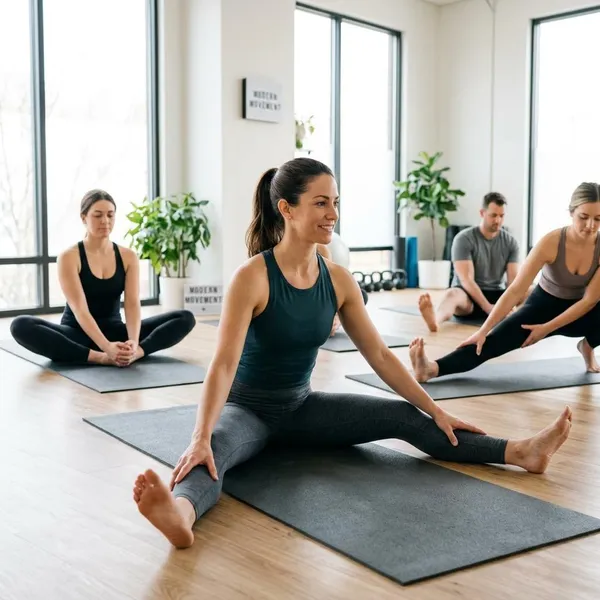
Sit with your legs in a comfortable V shape, not the widest position you can manage. Put your hands on the floor in front of you and hinge forward from your hips. If your lower back rounds right away, sit on a blanket or keep your hands behind you for support.
Use this stretch when your body is already a little warm. For a beginner, that might mean after a short walk around the house; for someone training regularly, it may fit better after a workout than before one.
Wide leg forward fold lengthens both inner thighs
Stand with your feet wide and hinge forward with a long back. Your hands do not have to reach the floor. Rest them on a chair, blocks, or your thighs so the stretch stays in the inner thighs rather than pulling mainly through the lower back.
Half kneeling inner thigh stretch helps with tightness
Start on one knee, extend the other leg out to the side, and keep your hands on the floor or a sturdy support. Slowly rock your hips back until you feel the inner thigh of the straight leg stretch, then ease forward again.
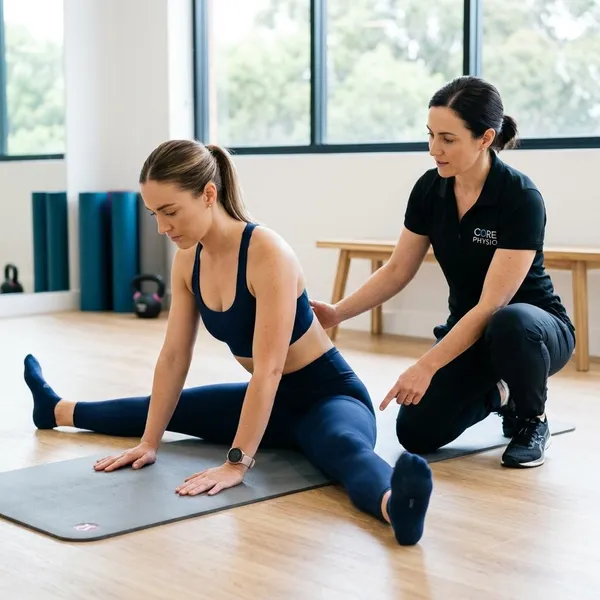
How to do inner thigh stretches safely
Safety comes down to three checks: enter the stretch slowly, keep the feeling mild to moderate, and stay relaxed enough to breathe. If one of those checks fails, reduce the range before holding the position longer.
Move into each stretch slowly
Give your muscles a few seconds to understand the position. In a side lunge, shift your hips gradually instead of dropping into the deepest point. In a butterfly stretch, bring your feet in little by little rather than yanking them close.
Stop before the stretch becomes sharp or painful
A safe stretch feels like a clear pull, not a warning signal. Sharp, stabbing, pinching, burning, or unstable sensations mean you should come out of the position or make it much easier.
Be more cautious if you recently strained the groin, have bruising, feel pain when walking, or notice swelling. In those cases, stretching harder is not a shortcut; it may make the area more irritated.
Keep your breathing steady and relaxed
If you cannot breathe normally, the stretch is probably too intense. Try one slow inhale, then a longer exhale, and let your shoulders and hips soften without pushing deeper.
- Good sign: the stretch feels slightly easier after a few breaths.
- Back off: the feeling keeps getting sharper.
- Reset: you are clenching your jaw, gripping the floor, or holding your breath.
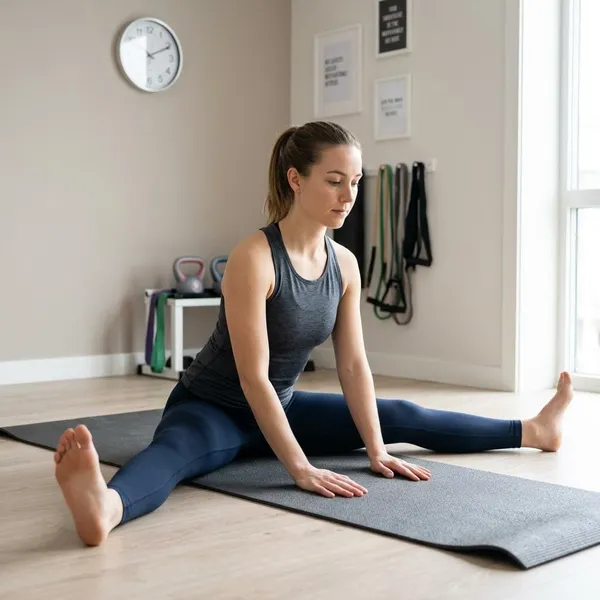
How long to hold each stretch
Hold time should match your current comfort level, not an ideal number you feel forced to hit. For most people, short relaxed holds are enough at first. Longer holds are useful only when the stretch stays calm and controlled.
Short holds work well for beginners
Start with 15 to 20 seconds for static stretches, or 6 to 10 slow reps for moving stretches like the half kneeling rock-back. That is long enough to feel the position without turning it into a test of tolerance.
Longer holds can help once your muscles warm up
After light movement, a workout, or a warm shower, 30 to 45 seconds may feel better. Some people can comfortably hold up to 60 seconds, but only if the stretch softens rather than becomes more intense.
Repeat each stretch without rushing
Two shorter rounds often feel better than one long hold. Come out of the stretch, shake your legs loose, take a breath, and repeat if the area still feels comfortable.
- Butterfly stretch: 1 to 3 rounds
- Side lunge stretch: 1 to 2 rounds per side
- Half kneeling rock-back: 6 to 10 slow reps per side
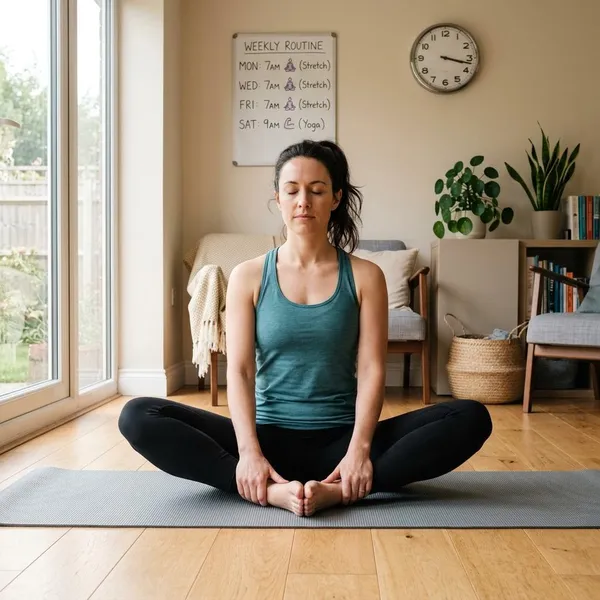
How often to stretch your inner thighs
You do not need a long routine to make progress. A short plan you repeat is more useful than a perfect routine you only do once. Match the frequency to why you are stretching: general comfort, ongoing tightness, or better movement for training.
A few times a week is enough for most people
For general flexibility and daily comfort, two to four sessions a week is a sensible starting point. Keep it simple: choose two stretches, spend five to ten minutes total, and stop while the area still feels good.
Daily stretching can help with ongoing tightness
If your inner thighs feel tight almost every day, use a very gentle daily routine instead of one hard session. Five minutes after sitting for a long time or before bed can be enough.
Keep daily stretching easy. If you feel sore, tender, or more guarded the next day, reduce the intensity or take a rest day. More frequent does not mean more forceful.
Consistency matters more than long sessions
The easiest way to stay consistent is to attach stretching to something you already do.
- After a walk
- After a workout cooldown
- Before bed
- During a TV break
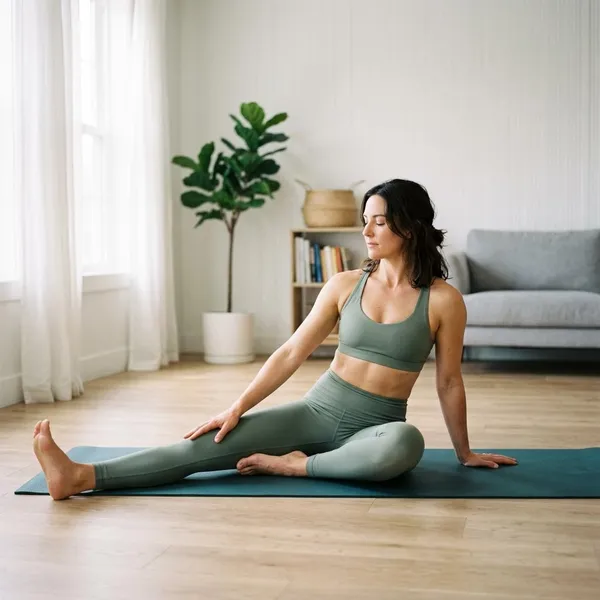
When inner thigh stretches help most
Inner thigh stretches are most useful when tightness is affecting how you sit, train, walk, or change direction. They are less useful as a quick fix for pain that feels like an injury. Use them for stiffness and controlled mobility, not to push through a strain.
They can ease tightness after sitting for long periods
Long sitting can make the hips and upper legs feel stiff, especially if you go from a chair straight into walking, stairs, or exercise. A gentle butterfly stretch or half kneeling rock-back can help you feel less locked up.
They can improve flexibility for workouts and sports
Sports and workouts that use side-to-side movement ask more from the inner thighs. Think tennis, soccer, basketball, dance, skating, martial arts, squats, lunges, and lateral steps.
- Before activity: choose controlled moving stretches.
- After activity: use calmer static holds.
- On rest days: keep the stretch moderate and relaxed.
They can help you move more comfortably day to day
You may notice the benefit in ordinary movements first: stepping out of a car, climbing stairs, getting down to the floor, or moving sideways in a small kitchen or crowded room. That kind of comfort is a better goal than forcing a very wide straddle.
If you only need everyday mobility, stay with the simpler stretches. Deeper positions are optional, not required.
Mistakes to avoid while stretching
Most stretching mistakes come from trying to speed up the process. Inner thighs usually respond better to control, warmth, and repeatable effort than to aggressive depth.
Bouncing makes the stretch less controlled
Bouncing can push you past your comfortable range before you have time to notice it. If you want movement, use slow rock-backs, gentle side-to-side shifts, or controlled side lunges instead of quick pulses.
Forcing range too early can make tightness worse
Trying to pull yourself into the deepest position often makes tight muscles guard more. Leave a little space before your limit, especially in seated straddles and wide forward folds.
Skipping warm up can make stretching feel harder
Cold stretching is not always wrong, but it often feels rougher. Before deeper stretches, try a short warm-up such as a few minutes of walking, marching in place, easy squats, or stairs. If you are stretching before sleep, a warm shower can make gentle holds feel smoother.
Conclusion
The safest approach is simple: choose a stretch you can control, keep the feeling mild to moderate, and repeat it often enough that your body stops treating the position as a threat. If stretching helps you move more comfortably, keep it gentle and consistent; if it creates pain or lingering soreness, back off and treat that as useful feedback rather than a challenge to push through.