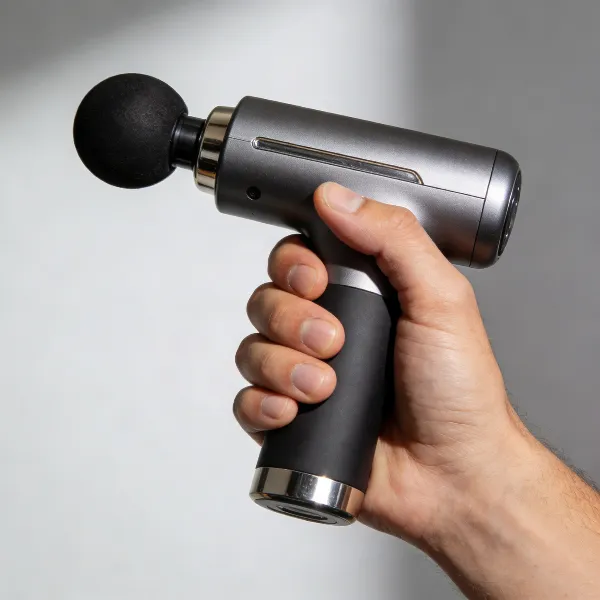
If you've been struggling with plantar fasciitis, you know how painful and frustrating it can be. The constant discomfort in your feet can make everyday activities like walking, standing, and exercising feel like a challenge. Luckily, a massage gun for plantar fasciitis can help provide some much-needed relief. In this guide, we'll show you how to use a massage gun safely and effectively, the areas to target, what to avoid, and how to incorporate other treatments for the best results.
What a Massage Gun Can Do for Plantar Fasciitis
Using a massage gun for plantar fasciitis can help target the root causes of the pain: tight muscles and inflammation. It's a great tool to include in your recovery plan, but it works best when combined with other treatments, like stretching and strengthening exercises. Here's how a massage gun can help:
It may help reduce muscle tightness
Muscle tightness often contributes to the pain you feel with plantar fasciitis. The gentle percussive therapy of a massage gun helps relax the muscles around the affected area, improving blood flow and promoting relaxation. By targeting the calf muscles, soleus, and Achilles tendon, a massage gun can help release tension and reduce the pressure on your feet, leading to greater mobility.
It may support short-term pain relief
One of the main reasons people turn to a massage gun for plantar fasciitis is to manage pain. The rhythmic movements of the device stimulate nerve endings and block pain signals, offering short-term relief. While it doesn't cure the condition, it can certainly make it easier to go about your daily activities while you work on a more comprehensive recovery plan.
It works best as part of a wider recovery plan
A massage gun can be effective for short-term relief, but it should be part of a bigger plan. To fully recover from plantar fasciitis, it's essential to combine massage gun therapy with other treatments like stretching, strengthening exercises, and proper rest. Think of the massage gun as a tool to help you feel better in the moment, but not a substitute for long-term care.
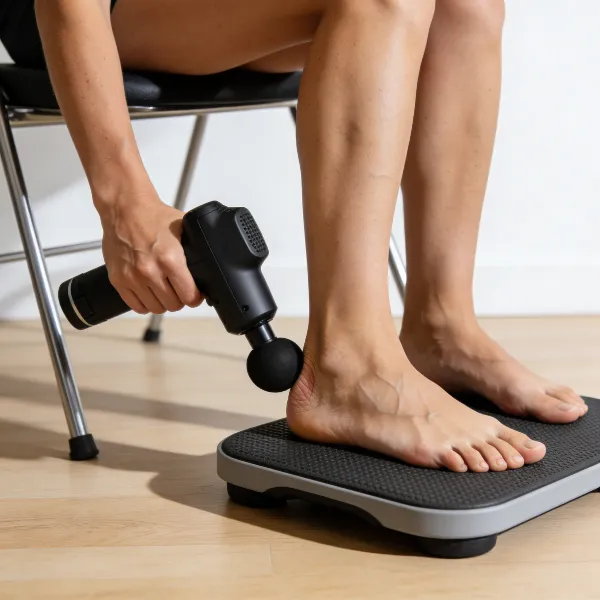
Where to Use a Massage Gun for Plantar Fasciitis
To get the best results, it's important to use your massage gun on the right areas of your feet and legs. These areas are often tight and contribute to the pain of plantar fasciitis. Here are the key spots to target:
Calf muscles
The calf muscles play a big role in plantar fasciitis, as tight calves can increase the strain on the plantar fascia. A massage gun can be a great way to loosen up these muscles, helping to reduce the stress on your feet. Be sure to target both the gastrocnemius and soleus muscles for complete relief.
Soleus and Achilles area
The soleus muscle (located beneath your calf) and the Achilles tendon are also critical to address. These areas are often tight in those with plantar fasciitis, and releasing tension here can improve flexibility and reduce foot pain. Gently massage the Achilles tendon and soleus to ease tightness and prevent further discomfort.
Arch and bottom of the foot with light pressure
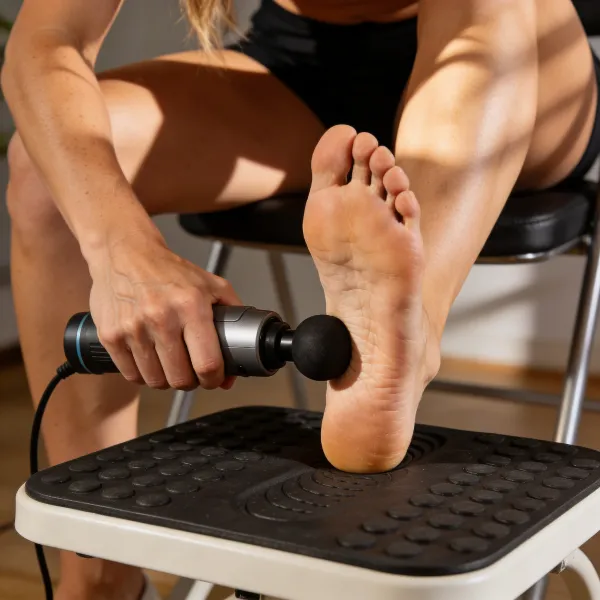
The bottom of the foot, specifically the arch, is where plantar fasciitis pain typically occurs. Lightly applying the massage gun to the arch with gentle pressure can help relieve tension in the plantar fascia. Start on a lower speed to avoid overstimulation and gradually increase pressure as needed.
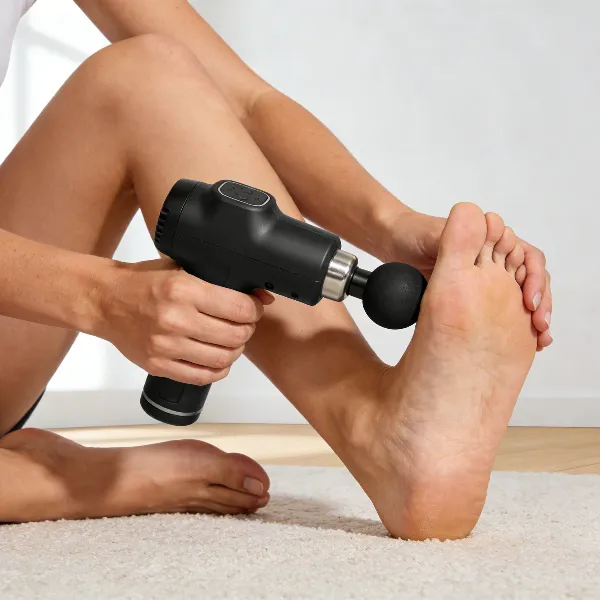
How to Use a Massage Gun Safely
When using a massage gun for plantar fasciitis, safety is key. Using the device incorrectly could make your symptoms worse, so it's important to follow a few simple guidelines for safe and effective use.
Start with a low speed
Always begin with the lowest speed setting on your massage gun. This allows your body to adjust to the treatment and helps you assess how it feels. Starting off too intense can cause discomfort and potentially make your pain worse. Gradually increase the speed as needed, but avoid using the highest setting, especially at first.
Keep each area short and controlled
Don't overdo it by spending too much time on any single area. Limit your use of the massage gun to 1-2 minutes per muscle group to avoid irritation. It's best to move the gun slowly and steadily over the targeted area, allowing it to work its magic without over-stimulating the muscles.
Avoid pressing too hard
A common mistake when using a massage gun is pressing too hard. While it may seem tempting to dig into the muscles, too much pressure can cause bruising, increase pain, or even harm the tissues. Let the massage gun do the work and keep pressure moderate. This will ensure better results without causing additional harm.
Follow with stretching if needed
After using the massage gun, consider incorporating some gentle stretching exercises to further relieve tension and maintain flexibility. Stretching can help prevent the muscles from tightening again and improve overall foot health, aiding in your recovery from plantar fasciitis.
What to Avoid When Using a Massage Gun
While massage guns are great tools, there are certain things you should avoid when using them to treat plantar fasciitis. Avoiding these common mistakes can help prevent injury and ensure you get the most out of your treatment.
Avoid bony areas and sharp pain
Do not use the massage gun over bony areas like your ankle bones or the top of your foot. Applying the device to these areas can cause discomfort or damage. Also, if you experience sharp pain while using the massage gun, stop immediately. You should only use it on areas where you feel a dull, tight sensation or mild discomfort.
Avoid using it on acute swelling
If your foot is swollen, avoid using the massage gun on the inflamed areas. Percussive therapy on swollen tissue can aggravate the inflammation and make the pain worse. Wait until the swelling has gone down before using the massage gun in the affected area.
Avoid overusing it in one session
Using the massage gun for too long can result in muscle soreness, bruising, or increased discomfort. Keep your sessions short—no more than 10-15 minutes per area—and take breaks between muscle groups. Overuse can do more harm than good, so it's important to keep your sessions controlled and moderate.
When a Massage Gun May Not Be Enough
While massage guns can be very helpful, there are some instances when they may not provide enough relief. In these cases, it's important to seek additional treatment options.
Pain that keeps coming back
If your plantar fasciitis pain is recurring despite using a massage gun, it may be time to look for additional solutions. This could mean that there's an underlying issue, such as a tear in the fascia or an imbalance that requires a more targeted approach.
Pain that affects walking
If your pain is so severe that it's impacting your ability to walk, it's important to consult a healthcare professional. They can provide a more thorough assessment and suggest advanced treatments, such as physical therapy, orthotics, or other interventions to address the cause of the pain.
When to see a podiatrist or physio
If the pain persists or becomes debilitating, you should make an appointment with a podiatrist or physiotherapist. These specialists can assess your condition and provide personalized advice on treatment options to help you recover and get back to normal activities.
Conclusion
Incorporating a massage gun into your plantar fasciitis recovery plan can provide temporary relief by reducing muscle tension and improving circulation. However, it's important to remember that a massage gun is just one part of the solution. Combining it with proper stretching, strengthening exercises, and rest will help you recover more effectively. Always consult with a healthcare professional if the pain persists or worsens, as they can guide you on the best course of treatment.